

Blog

Avoiding Unfinished Renovations! NSW Builders Insurance Obligations

Many homeowners in New South Wales (NSW), Australia, face the risk of builders failing to complete their projects on time or sudden unforeseen problems when undertaking residential construction or renovation.

Last year, an NSW builder suffered cash flow problems when its building license was suspended, leaving at least 45 residential projects unfinished and severely impacting homeowners’ finances and quality of life.

This incident serves as a reminder that when undertaking residential building work, homeowners need to be particularly mindful of how to protect themselves from financial loss due to construction disruption or building quality issues. 

A crucial safeguard is that builders must take out appropriate insurance before work commences. Particularly in the case of residential building work, a builder who fails to carry the required insurance may not only face legal repercussions, but may also leave the homeowner’s rights and interests unprotected. Fortunately, Home Building Compensation (HBC) insurance is a key consumer protection mechanism in NSW that ensures that homeowners are reasonably compensated in the event of a builder’s failure to perform. 

This article will focus on the definition of ‘residential building work’, the types of insurance that builders are required to have in place prior to commencing work, and the potential consequences of commencing work without the required insurance in place. 

What is “residential construction work”?

In New South Wales, Residential Building Work is defined broadly to include not only the construction of a new home, but also alterations, extensions, renovations, repairs and conservation treatments to an existing home. For example, the renovation of bathrooms, kitchens or laundry rooms, the construction of swimming pools, structural gardening, the installation of screens or pool fences, and the erection of sunrooms are all considered residential building work. In addition, preliminaries closely related to construction, such as obtaining building plans or pre-assessment of applications and landscape architectural design services, are also considered part of residential construction work if they have a direct causal relationship to the execution of the work. 

However, not all works involving residential premises fall within the scope of residential building works. Under the relevant legislation, a project is exempt from the Residential Building Code if the reasonable market cost of the work (including labor and materials) does not exceed AUD $5,000, unless the work involves a specific area of expertise. Specialist works typically include plumbing and drainage (except roof plumbing), gas installation, electrical wiring, and refrigeration or air-conditioning works as required by the code. As these types of works involve higher safety risks, the builder must hold the appropriate licenses and comply with strict regulatory requirements. In addition, certain interior painting works, general flooring (not involving structural alterations) and demolition works, which are separate from the residential building contract, are also excluded from the scope of residential building works. 

Mandatory insurance requirements for residential construction work

Home Building Compensation (HBC) Insurance is an insurance policy mandated by NSW law to protect homeowners against losses arising from a builder’s inability to fulfill a contract. It applies to all residential building and alteration projects over AUD $20,000 (including GST). HBC insurance protects homeowners against loss; in the event of the builder’s insolvency, death, disappearance or revocation of license for failure to comply with a court order, homeowners may apply for compensation. Coverage includes unfinished work, construction design defects, legal or other costs of seeking compensation, and more. Whether it’s a new home or a renovation of an existing home, builders are required to purchase HBC insurance and provide the homeowner with proof of valid insurance before beginning work. It would be a breach of NSW law to commence work without obtaining HBC insurance. 

Uninsured will face:

A. Fines and Liability 

Under the relevant NSW legislation, builders who commence work without purchasing Home Building Compensation Insurance (HBC Insurance) will face severe legal sanctions. Individuals can be fined up to AUD $22,000 for a first offense, while companies can be fined up to AUD $110,000. For a second or subsequent offense, the fines can increase to AUD $55,000 and may even face up to 12 months in jail. The fine information is published on the Building Commission NSW’s license register, affecting future business. In addition, uninsured builders may not be able to legally recover their work in the event of a payment dispute, resulting in financial loss. 

B. Damage to Goodwill and Loss of Client Trust 

Failure to insure can not only lead to legal liability, but can also seriously damage a builder’s reputation in the industry. Clients often prefer builders who are covered by insurance as it reduces risk. However, if a builder has a history of non-compliance, clients may lose trust, which can have a direct impact on a builder’s business. Last year, the New South Wales State Insurance Regulator Authority (SIRA) issued warnings to nine building companies for failing to take out mandatory residential building indemnity insurance for 131 projects they were responsible for. The failure of these builders to take out insurance exposes the potentially serious consequences of failing to comply with the regulations. Therefore, builders must strictly comply with the relevant regulations to ensure that their projects are legally compliant, so as to avoid unnecessary legal and financial risks and to maintain the credibility of their industry. 

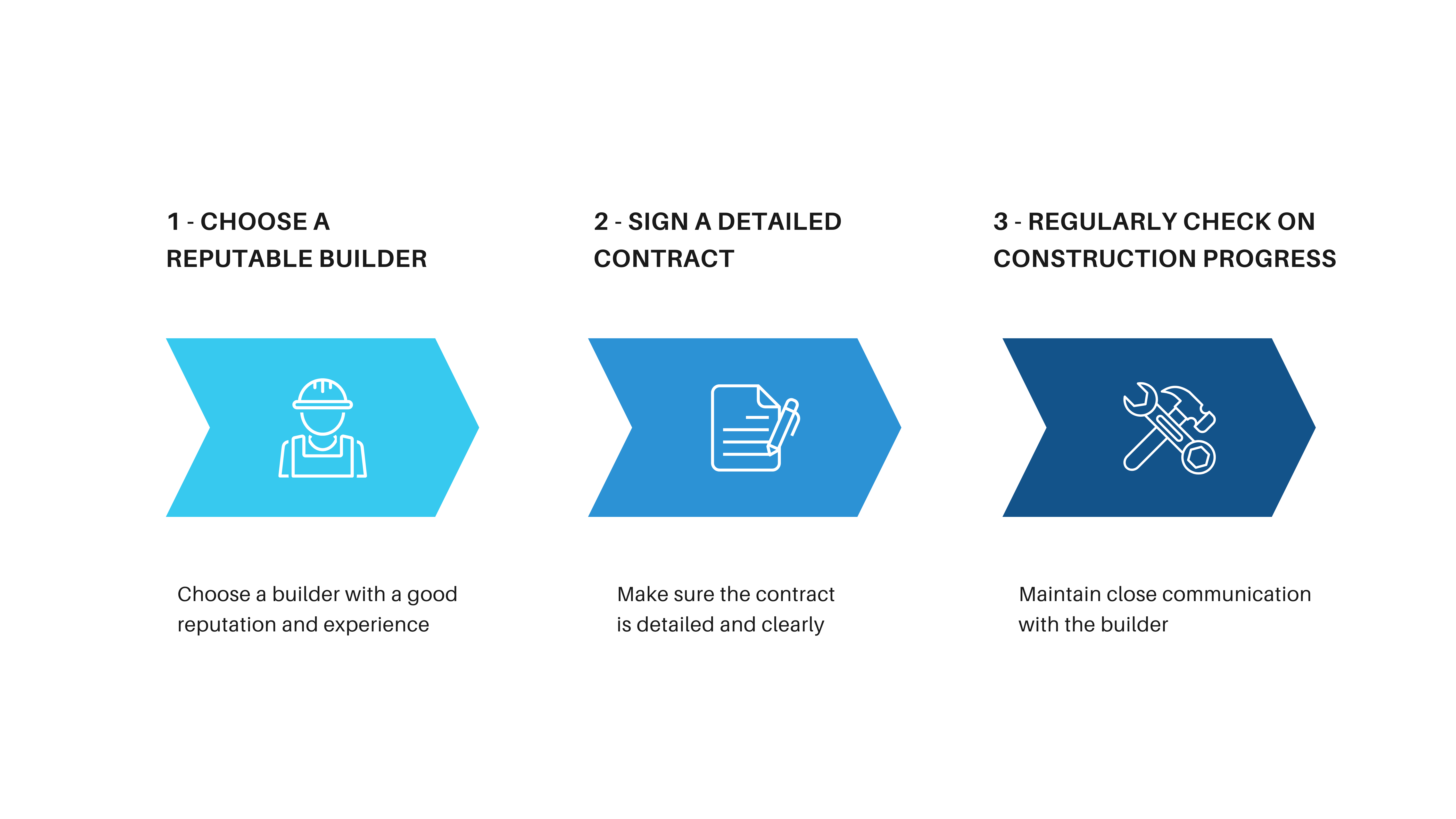
As a homeowner, how can you ensure that you are adequately protected?

  1. Choose a reputable builder: Choose a builder with a good reputation and experience, who usually pays more attention to compliance and quality and can reduce the probability of problems.
  2. Sign a detailed contract: Before signing a contract, make sure it is detailed and clearly agrees on elements such as construction content, quality standards, payment methods and construction period. A detailed contract can help homeowners have a clear legal basis when they encounter problems.
  3. Regularly check on construction progress: Homeowners should maintain close communication with the builder and regularly check on construction progress to ensure that the project is proceeding according to plan. If any problems are found, take timely measures to prevent the situation from expanding.

Conclusion

Residential Building Works in New South Wales is broadly defined and covers many aspects of residential construction. Prior to commencing work, builders are required to have HBC insurance to ensure homeowner’s rights and compliance. If a builder commences construction without insurance, they will not only face serious legal and financial consequences, but may also cause the homeowner’s financial situation and quality of life to be affected. Therefore, builders should strictly comply with relevant regulations to ensure that the work is carried out in a compliant manner to avoid unnecessary legal risks and financial losses. At the same time, it is vital that homeowners choose a qualified and reputable builder and sign a detailed contract with the builder to ensure that there is a clear legal basis in the event of problems with the work. If any problems are encountered during the property renovation process, it is vital to seek professional legal help in a timely manner. The specialist property team at Sunfield Chambers Solicitors & Associates will provide you with a full range of legal support to help you ensure that your project runs smoothly, avoiding potential financial risks and protecting your rights and interests. 

Interested in learning more?
We will soon be hosting a knowledge sharing seminar on conveyancing to provide valuable compliance advice to protect your investment. To secure your place and continue to receive more details, please provide us with your contact information via the form below.
Please enable JavaScript in your browser to complete this form.

Writer: Xueying (Grace) Yang; Content Planner: Yan Zhou; Xueying(Grace) Yang; Proofreading: Gang(Abraham) Sun 

This article is based on publicly available information and the author’s understanding, and does not constitute any form of professional legal advice or business decision. Readers should refer to this article in light of their own actual situation and consult relevant professionals for specific guidance. The author and the publishing platform assume no legal responsibility for any consequences arising from the use of the information in this article.  

Consultation with Specialized Lawyers