


Recent Hot Topics
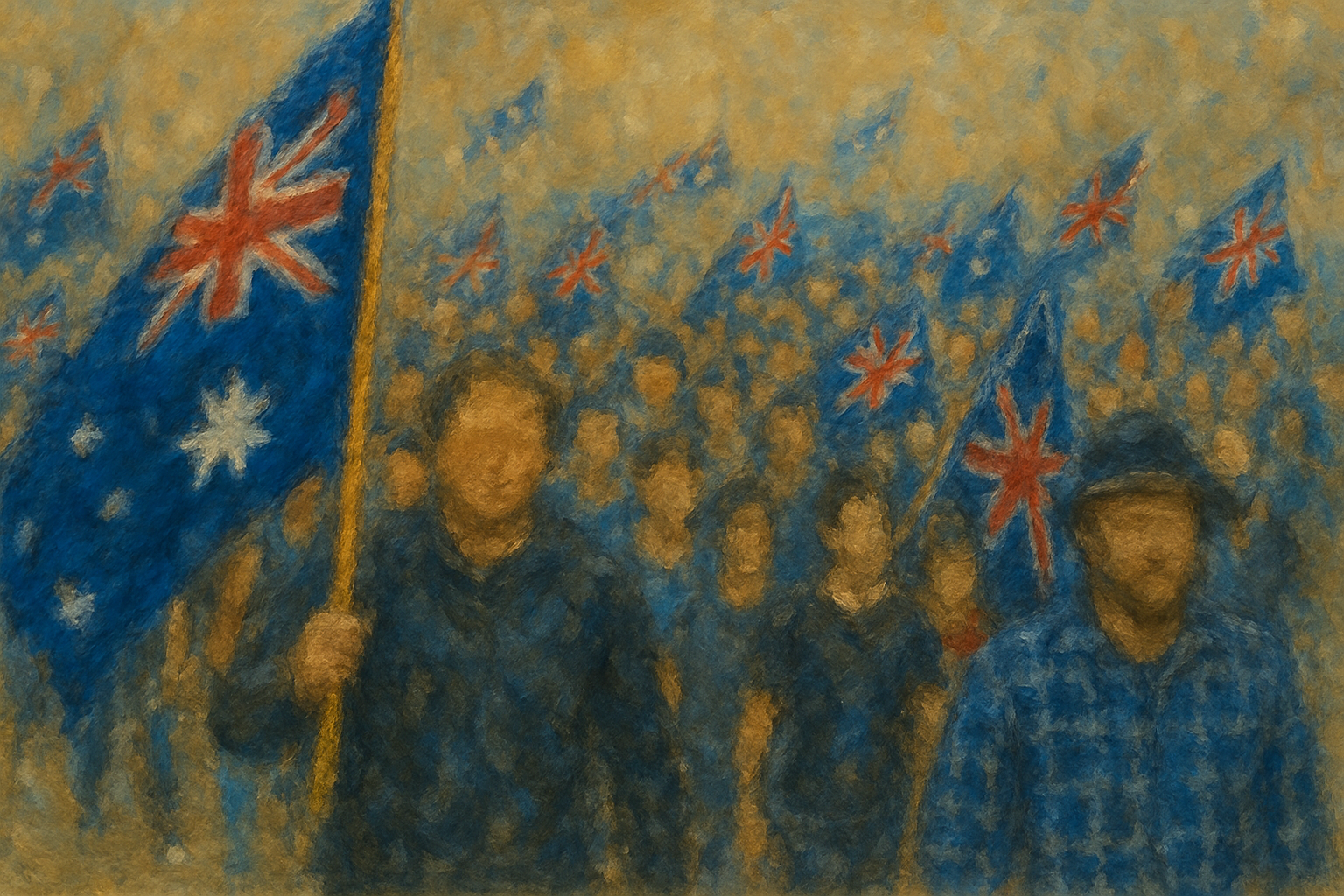
On August 31, 2025, Australia witnessed its largest anti-immigration rally in recent years—the “March for Australia.” Chanting “Take back our country,” crowds simultaneously marched in six major cities: Belmore Park in Sydney CBD, Flinders Street Station in Melbourne, Roma Street Parklands in Brisbane, Supreme Court Gardens in Perth… The core demand was to end so-called “mass immigration.” Protesters repeatedly emphasized that excessive immigration causes rising living costs, housing shortages, and job instability. However, one notable participant was the self-proclaimed neo-Nazi group National Socialist Network (previously reported as Australia’s largest white supremacist organization) [1], heightening the social risks underlying the march.
Is this protest a reflection of society’s anxieties over housing, inflation, employment, and immigration issues, or is it a racially charged attempt by certain minority groups to bring the “White Australia Policy” back into the public discourse?
Since World War II, Australia’s demographic structure has undergone significant changes amid rising global migration: net migration has consistently exceeded emigration, while the growth rate of overseas-born residents has continually surpassed that of the native-born population. As a major immigration nation historically dominated by European-descended migrants, this defining characteristic has gradually weakened over the past two decades. The proportion of Australians born overseas rose from 23.8% in 2004 to 31.5% in 2024. The largest increases came from India (up by 505,000), China (234,000), the Philippines (164,000), and Nepal (155,000) [2].
Faced with this significant shift, a segment of the population has shifted from anxiety to fear, believing the influx of immigrants has “undermined Australia’s core values.” This sentiment has been amplified during the recent anti-immigration “March for Australia” campaign, where certain groups have blamed economic and housing pressures on new immigrants. Extremist factions have gone further, attempting to revive historical xenophobic ideologies.
Throughout Australia’s long history, the White Australia Policy casts an indelible shadow. Enacted in 1901 and only repealed in 1973, it sought to construct a false national purity by screening immigrants based on skin color and ancestry. At the time, white Australians widely believed racial purity would help maintain economic and social stability. In reality, however, this policy legalized racial discrimination, deepened societal prejudice, and simultaneously constrained Australia’s labor force and economic development.
The White Australia Policy refers to the Immigration Restriction Act passed by the Australian Commonwealth government in 1901. This legislation was enacted to restrict non-European immigrants from entering Australia, aiming to preserve the nation’s predominantly European identity[3]. The policy gradually relaxed between the 1950s and 1970s due to the demand for overseas labor and diplomatic efforts to strengthen ties with Asia [4][5], and was formally abolished in 1973 by the Labor government led by Gough Whitlam[6]. That same year, Federal Immigration Minister Al Grassby introduced the Multiculturalism policy to Parliament[7], emphasizing that cultural diversity itself constitutes the nation’s strength. This marked Australia’s formal incorporation of multiculturalism into its national development strategy[8]. Subsequently, the Racial Discrimination Act 1975 outlawed discrimination based on race, completely erasing the legacy of the White Australia Policy [9]. Multiculturalism gradually became a mainstream societal value, guiding Australia’s policy-making and social development.
However, the large-scale anti-immigration protests erupting across Australia have left many wondering whether history might echo once more. Slogans like “Take back our country,” “Australia first,” and “It’s time to put Australia first” have emerged at these mass gatherings, where violent clashes have broken out among demonstrators. Could society truly be sliding back down the path of xenophobia?
To determine whether society is truly experiencing a resurgence of xenophobia, we must first get back to the real pressures behind this protest.
Inflation and Rising Living Costs
Over the past three years, Australia has seen a persistent upward trend in inflation and housing costs [10]. Official data shows an annual increase of 5.1% in 2022, reaching 7.8% by year-end, with housing, food, and energy prices experiencing the sharpest hikes. Concurrently, rental inflation surged to approximately eight times the levels seen in the late 2010s. Median rents in Melbourne and Sydney climbed over 30% within two years, vacancy rates dropped below 1%, and bidding wars emerged in the rental market [11].
Employment Competition
According to data released by the Australian Bureau of Statistics (ABS) in July 2025, the unemployment rate for young people aged 15 to 24 stood at 9.8%, significantly higher than the national average of 4.2% [12]. Working holidaymakers and temporary visa holders entering blue-collar positions have intensified competition for low-skilled workers. Furthermore, the government has proposed plans that may further relax the working hours allowed for international students by 2026 [13].
Many citizens who took to the streets to participate in protests did so not out of hostility toward immigrants, but driven by tangible, everyday anxieties: soaring rents, strained public healthcare, employment pressures, competition for educational resources… These pressing realities are palpable, yet they often struggle to receive immediate policy responses.
Yet these complex economic and social tensions have been manipulated by extreme racists to target the growing non-European immigrant population in recent years. This flawed narrative not only obscures the true sources of anxiety but also artificially fuels ethnic divisions. By simplifying complex social issues into the claim that “immigrants are taking resources,” they divert public attention away from structural problems like housing, employment, and institutional reform. Such narrow-minded rhetoric not only undermines rational discourse but also runs counter to Australia’s long-standing commitment to multiculturalism.
When normal public discourse descends into “hostility toward a particular group,” the resulting stigmatization and prejudice not only fail to address genuine issues but may also breach the boundaries of legal and social tolerance. Section 18C of the Racial Discrimination Act 1975 stipulates that any offensive conduct based on race, color, national or ethnic origin may be deemed unlawful [14].
During this protest, extremist groups sought to exploit the situation. Some neo-Nazis or far-right elements promoted their agenda through social media or appeared at the scene [15], attempting to radicalize the public’s existing anxieties. This not only risks fueling hate speech but could also trigger violent incidents. More alarmingly, their targets extend beyond immigrant communities. According to reports, that same evening, a group of men—including members of the National Socialist Network—attacked the Camp Sovereignty protest site in Melbourne. They tore down Indigenous flags and injured at least four people [16]. This incident exemplifies how extremists exploit public events to commit violence.
These developments not only exacerbate social divisions but also serve as a stark reminder: if societal problems continue to be attributed to a single group, risks will escalate further:
- Erosion of social trust: Minority groups face stigmatization, communities grow wary of one another, and social cohesion weakens.
- Fertile ground for extremism: Hate speech provides a breeding ground for extremist organizations, heightening security risks.
- Policy Misdirection: Urgent reforms needed in housing supply and labor market regulation may be overshadowed by emotional reactions, hindering policy progress.
Data indicates that immigrants actually provide crucial support to Australian society:
- They fill labor-intensive positions and occupy jobs that locals are unwilling to take; the 2021 Census revealed that over 40% of registered nurses and aged care and disability support workers were born overseas [17].
- Mitigating the effects of Australia’s aging population and expanding tax revenue sources: Young immigrants aged 25-44 generate $12,000 more in net fiscal benefits annually than native-born workers, primarily due to higher employment rates and specialized skills [18].
Overall, immigrants inject fresh vitality into Australia’s economy and society, representing an invaluable resource that cannot be overlooked. Anna Boucher, Associate Professor of Public Policy at the University of Sydney and a global migration expert, states that treating immigration restrictions as a solution to social welfare issues is misguided, as it ignores the crucial role immigrants play in Australia’s economic and social functioning. Immigrants fill skill gaps that the local workforce cannot meet, and they are also an integral part of Australia’s multicultural identity [19].
Representatives from various political parties also explicitly condemned the anti-immigration rally, denouncing violence and racism as fundamentally incompatible with Australia’s core values. This further underscores that anti-immigration sentiment is not a mainstream social trend, but merely marginalized noise [20]:
- Immigration Minister Tony Burke stated bluntly, “Nothing is more contrary to the Australian spirit than anti-immigration sentiment.”
- Opposition Leader Sussan Ley emphasized, “There is absolutely no place for violence and racism.”
- Senior Labor Minister Murray Watt declared: “We strongly condemn today’s ‘Great Australian March’ rally. This is not an act that promotes social harmony.”
Summary
Today’s anti-immigration protests are not the beginning of a so-called “anti-immigration wave,” but merely an emotional outlet for some citizens facing pressures from housing, employment, and the cost of living. The problem lies in extremist groups exploiting this opportunity to amplify public anxieties, steering them toward xenophobic and racist directions. Blaming immigrants not only misses the root causes of these issues but also fails to offer genuine solutions. Mainstream politics and society have long made it clear: violence and racism have no place here, and anti-immigration sentiment is absolutely not the future direction for Australia.
The facts are equally clear: immigrants are invaluable assets to a diverse society, indispensable in healthcare, education, research, and taxation. What is truly needed is for the government to advance diversity with wisdom and balance, resolving potential institutional conflicts. Only through sound legal policies, rational public discourse, and the continuation of multiculturalism can Australia continue to strengthen its diverse, inclusive, and harmonious society.
Written by Xueying Yang; Content planning: Gang Sun; Xueying Yang; Proofreading: Gang Sun
This article is provided by Sunfield Chambers Solicitors & Associates. The content of this article is based on publicly available information and the author’s understanding, and does not constitute any form of professional legal advice or basis for business decisions. Readers should refer to this article in the context of their own actual situation and consult relevant professionals for specific guidance. The author and the publishing platform do not assume legal responsibility for any consequences arising from the use of the information in this article.
References
[1] Special Broadcasting Service. (2025). What we know about the neo-Nazis NSW wants to name and shame. https://www.sbs.com.au/news/article/what-we-know-about-the-neo-nazis-nsw-wants-to-to-name-and-shame/ibkwri6vr
[2] ABS. (2025). Australia’s population by country of birth, Jun 2024. https://www.abs.gov.au/statistics/people/population/australias-population-country-birth/latest-release
[3] National Museum of Australia. (2025). Ending the White Australia policy. https://www.nma.gov.au/defining-moments/resources/end-of-white-australia-policy
[4] Australian Financial Review. (2021). The 1950s: When Australia was a developing economy. https://www.afr.com/policy/economy/the-1950s-when-australia-was-a-developing-economy-20210915-p58ryg
[5] [9] National Archives of Australia. (2025). The Immigration Restriction Act 1901. https://www.naa.gov.au/explore-collection/immigration-and-citizenship/immigration-restriction-act-1901
[6] Australian Culture. (2025). The End of the White Australia Policy. https://www.australianculture.org/the-white-australia-policy-the-end
[7] National Museum of Australia. (n.d.). Multiculturalism. https://www.nma.gov.au/explore/features/harvest-of-endurance/scroll/multiculturalism
[8] Department of Home Affairs. (2025). Our history – Multicultural affairs. https://www.homeaffairs.gov.au/about-us/our-portfolios/multicultural-affairs/about-multicultural-affairs/our-policy-history
[10] Australian Broadcasting Corporation. (2025). Australia is in a cost-of-living nightmare: what can the new Albanese government learn from its last term?. https://www.abc.net.au/news/2025-05-07/can-albanese-government-fix-the-economy-four-corners/105260320
[11] Lowy Institute. (2025). Australia’s rental crisis: home also costs its reputation abroad. https://www.lowyinstitute.org/the-interpreter/australia-s-rental-crisis-home-also-cost-its-reputation-abroad
[12] Australian Bureau of Statistics. (2025). Labour Force. https://www.abs.gov.au/statistics/labour/employment-and-unemployment/labour-force-australia/latest-release
[13] Parliamentary Budget Office. (2025).Student visa work hours – increase. https://www.pbo.gov.au/sites/default/files/2025-05/PBO-ECR-2025-2848-Student%20visa%20work%20hours%20%E2%80%93%20increase.pdf
[14] Commonwealth of Australia. (1975).Racial Discrimination Act 1975, Section 18C. https://www5.austlii.edu.au/au/legis/cth/consol_act/rda1975202/s18c.html
[15] Australian Broadcasting Corporation. (2025). Investigation finds links between white nationalist views and March for Australia organisers. https://www.abc.net.au/news/2025-08-28/who-is-behind-march-for-australia-anti-immigration-rallies/105657548
[16] The Guardian. (2025). Neo-Nazis attack Camp Sovereignty Indigenous site in Melbourne anti-immigration protest. https://www.theguardian.com/australia-news/2025/sep/01/neo-nazis-attack-camp-sovereignty-indigenous-site-melbourne-anti-immigration-protest-police-injured-sydney-ntwnfb
[17] Australian Bureau of Statistics. (2025). Caring nation: 15 per cent of Australia’s workforce in health care and social assistance industry. https://www.abs.gov.au/media-centre/media-releases/caring-nation-15-cent-australias-workforce-health-care-and-social-assistance-industry
[18] Global Migration Solutions. (2025). Benefits and challenges of skilled migration to Australia – a comprehensive analysis. https://www.globalmigrationsolutions.com/benefits-and-challenges-of-skilled-migration-to-australia-a-comprehensive-analysis
[19] Special Broadcasting Service. (2025). Anti-immigration rallies ignore Australia’s economic dependence on migration. https://www.sbs.com.au/language/chinese/zh-hans/podcast-episode/anti-immigration-rallies-ignore-australias-economic-dependence-on-migration/aws155x3y
[20] Special Broadcasting Service. (2025).SBS News Flash in Mandarin: Politicians condemn Sunday’s nationwide anti-migration rallies. https://www.sbs.com.au/news/podcast-episode/politicians-condemn-sundays-nationwide-anti-migration-rallies/mmgmyjvnf
Consultation with Specialized Lawyers

Abraham Sun
Principal Solicitor
As the Principal Solicitor, Abraham has been working with numerous clients including listed companies, state-owned enterprises, ultra-high-net-worth clients, and investment banks. Customers in various industries including Australian and Chinese companies and individual investors, had achieved considerable economic benefits with his professional legal advice.

Dickson Luo
Solicitor
Dickson mainly conducts dispute resolutions and commercial litigation in areas across insolvency, corporations, employment, real property and consumer law. He is proficient in English and Chinese Mandarin, and have extensive experience acting for clients who have limited or no English skills in complex disputes and litigation matters.

Linda Thai
Solicitor
Linda assisted our legal team with a range of litigation matters in Australian intermediate and superior courts. She has established solid foundations in litigation from assisting in matters from the initial investigation stage to briefing and liaising with barristers and also assisting our solicitors at court appearances.

Bhanu Seemar
Solicitor
Bhanu is a commercial litigation lawyer who has extensive experience working closely with counsel on a range of commercial law matters including contract disputes, insolvency disputes, consumer and franchise disputes, shareholder claims, financial services and regulatory enforcement matters, corporations law, and class action litigation.
Latest Posts:
- Privacy Challenges in the AI Era: Is Your Information Truly Secure?
- 5% Deposit Scheme Explained: New Opportunities for First Home Buyers
- Zong Fuli Steps Down: The Succession Challenge for Private Enterprises
- “I want a divorce, but he’s in prison overseas” – Wang Nuannuan’s cross-border divorce dilemma
- What is International Public Notary? A Practical Guide for Seamless Cross-Border Document Circulation
- Experiencing Domestic Violence or Harassment? Criminal Lawyers Show You How to Effectively Use AVO to Respond